Assembly Language Programming for the 68000 Family
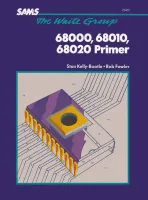
This book deals specifically with the Motorola 68000 family of microprocessors. It is primarily about assembly language programming. Chances are that a reader interested in assembly language programming is familiar with computers and their programming; In the unlikely event that you are not, and have picked up this book expecting to learn all about computers, I want to urge you to start elsewhere. In order to gain the maximum knowledge from this book, you should already be familiar with computers in general and have written some programs in a high-level language such as BASIC or Pascal. It is not necessary to know another assembly language or be an expert in computer programming. I start at a fairly low level but get up to speed pretty quickly. Those who already know another assembly language will be able to progress rapidly through the material. In the writing of this book I attempted to strike a balance between a beginner-level tutorial and the brief format of a reference manual. This level of presentation should appeal to the majority of readers.
There are 15 chapters plus a number of useful appendices. Chapter 1 covers number systems. This is mostly general information, but there is a little bit of 68000-specific information here. You should look through it even if you know number systems inside out. Chapter 2 describes microcomputer architectures in general, and the 68000 specifically.
Chapters 3 through 5 provide enough information to start writing complete programs. Chapters 6 through 8 cover more advanced topics such as addressing modes and subroutines. Once through chapter 8 you will have a substantial background in 68000 assembly language. At this point Chapter 9 presents a major program, a linked list manager. This helps to cement the techniques from Chapters 1 through 8.
Chapters 10 through 12 cover advanced topics such as exception handling, shift and rotate instructions, and advanced arithmetic. By the end of Chapter 12 you will know all the instructions of the 68000. Chapters 13, 14, and 15 cover the newest members of the 68000 family—the 68010, 68020, and 68030. Chapter 15 should be of special interest, since it provides an introduction to the latest and most powerful 68000 processor. You will be hearing more about the 68030 as it is introduced into systems. It is destined to have a major impact on the computer systems of the next decade.
Of special note is Appendix B, which provides program shells. These shells allow you to start programming with the Atari ST, the Apple Macintosh, and the IBM PC.